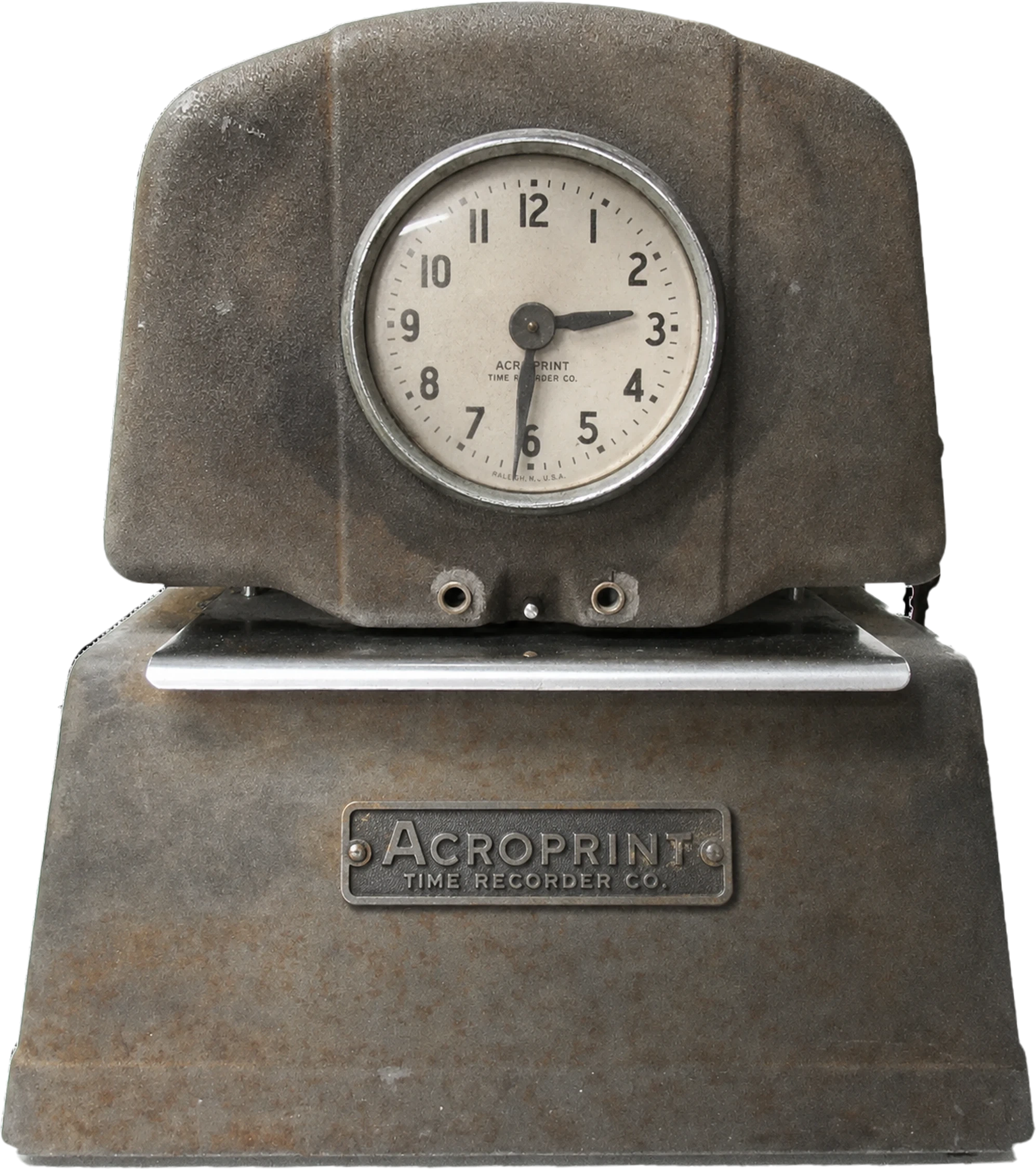
Agentic commerce in a carton box
 Deepanshu Pal
A short history of how strangers learned to trade, from clay tablets to the barcode to Amazon, and why the next buyer to open the box is a machine.
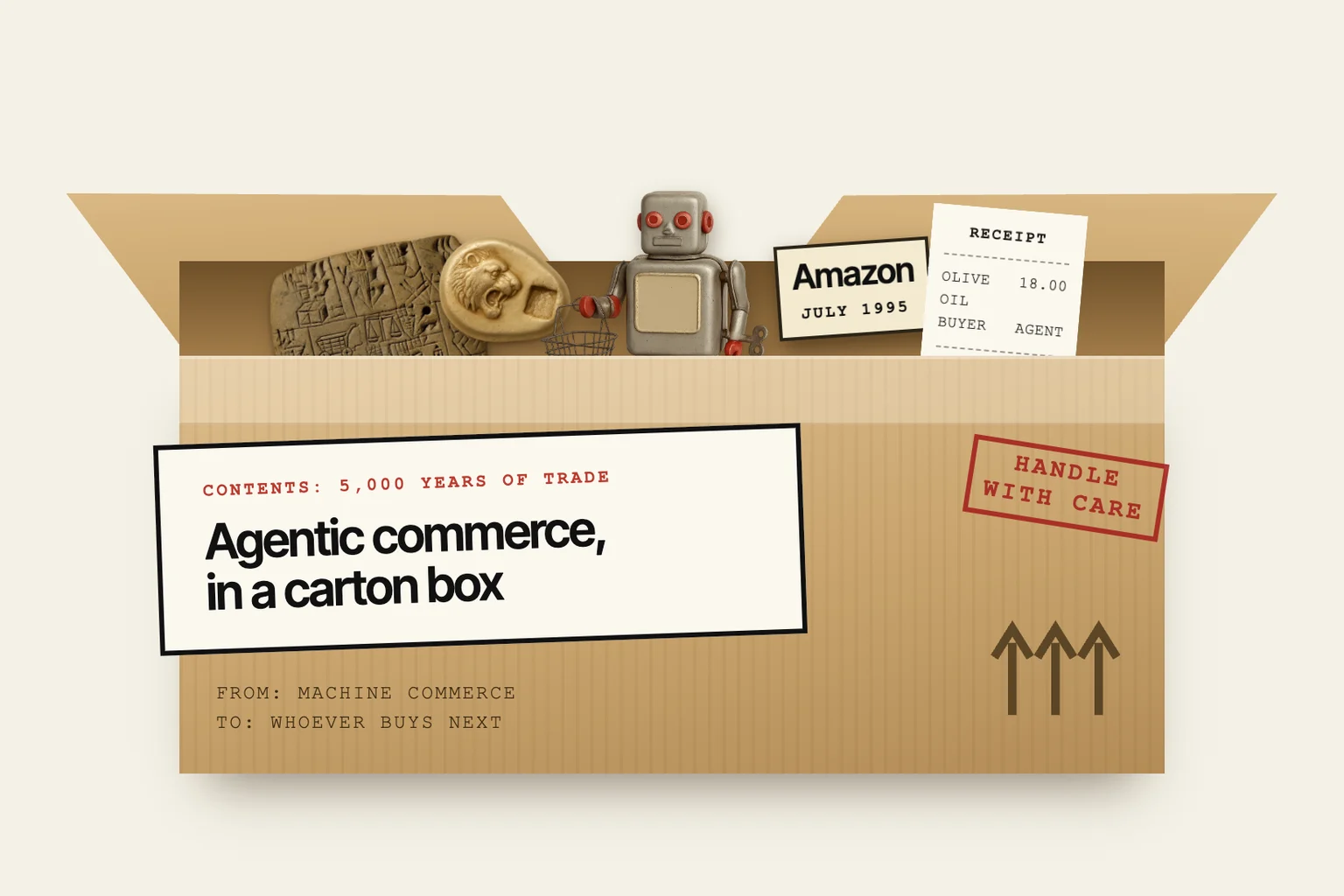 Open the boxThe interactive version: 12 layers, scroll and play
Every carton that leaves a warehouse carries the same promise. Someone you will never meet wants something you have, and both of you trust the box to get there. The promise is thousands of years old. The box is not. And the buyer is about to change again.
This is our thesis at Machine Commerce, told the long way round. We packed the history of trade into one carton. Open it with us, one layer at a time, and watch for the thread that runs through every layer. Each time trade grew, somebody wrote something down in a standard way, so that strangers could find each other, trust each other, pay each other and get the goods. The next buyer to open the box reads nothing but that standard.
Before money, a note of who owes what
The story most of us learned at school goes like this. Before money there was barter. The farmer with grain wanted shoes, the shoemaker wanted fish, and trade stalled until someone invented coins. The economist William Stanley Jevons gave the problem its famous name in 1875: barter needs "a double coincidence, which will rarely happen."
It is a tidy story, and the people who went looking for it could not find it. The anthropologist Caroline Humphrey put it flatly in 1985: "No example of a barter economy, pure and simple, has ever been described, let alone the emergence from it of money." What the record shows instead is credit. Neighbours kept track of who owed whom, and over time they wrote it down.
In the Near East that writing started with small clay counting tokens, from around 7500 BCE. By about 3300 BCE the tokens had become marks pressed into clay tablets, and the marks became cuneiform. Accounting came first and writing grew out of it. The first thing commerce standardised was not money. It was the record.
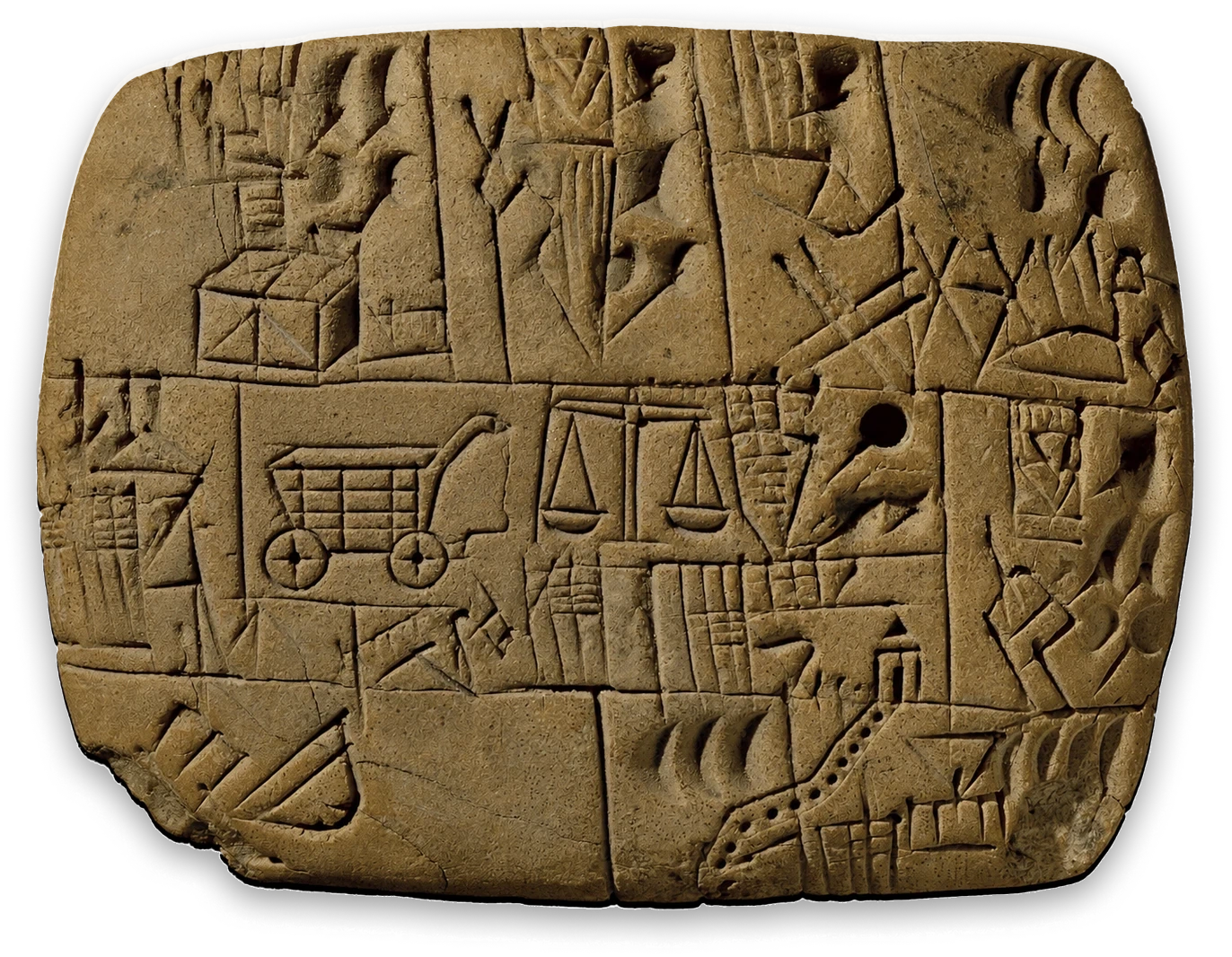 Clay, c. 3300 BCE
A stamp you can trust
For a long time value moved by weight. Silver was weighed on a scale at each sale, and each buyer had to trust the scale and test the metal. Then, late in the seventh century BCE, in Lydia and the Greek cities of Ionia, someone struck lumps of electrum, a natural mix of gold and silver, with a mark. The earliest pieces carry a lion's head.
The stamp changed who you had to trust. You no longer had to weigh and test the metal yourself. You trusted whoever stamped it, and that let strangers trade at a market without checking each other's silver. Rulers kept doing the same thing with measures. Magna Carta in 1215 set one measure of wine, ale and corn for the whole kingdom. France made the metre and the kilogram law in the 1790s. Each time, a shared standard took the place of a private check.
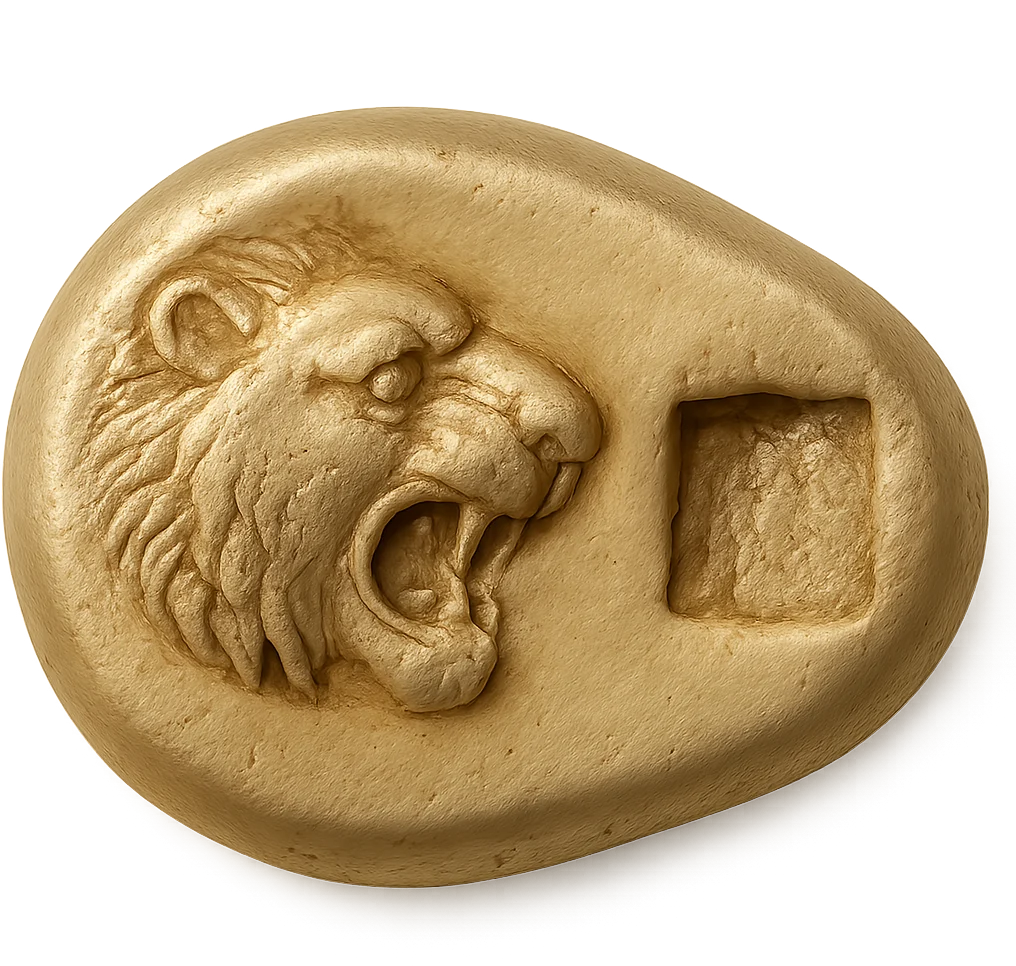 Lydia, late 7th c. BCE
Fairs, ledgers and paper promises
As routes got longer, carrying metal got riskier. In the thirteenth century the fairs of Champagne, six a year rotating between four towns, became what historians call "the undisputed fulcrum of international exchange in Europe." Merchants from Italy and Flanders met there, settled their accounts and carried paper home instead of coin.
The paper needed a method. In 1494 the Venetian friar Luca Pacioli printed the first known treatise on double-entry bookkeeping, a practice he called the method of Venice and did not claim to have invented. Every amount went in twice, once as a debit and once as a credit, so the books could check themselves. In China the Song state had gone further still: from 1024 it issued paper notes, the jiaozi, taking over from merchants in Sichuan who had first printed them.
Trust had moved again, from the person in front of you to a network of banks, books and written claims. You could trade with someone a thousand miles away because both of you trusted the paper.
The price on the tag
Printing made the next step possible. Jevons himself noticed that the press could solve his double coincidence: advertise what you have, and the person who wants it can find you. Names on goods became property. On 1 January 1876 the brewer Bass registered a red triangle as trade mark number one in Britain, so a buyer could tell who made the bottle without asking.
The bigger change was the price. For most of history the price of a thing was whatever you could talk the seller into. In the second half of the nineteenth century the new department stores stopped that. Le Bon Marché in Paris, from 1852, marked fixed prices and took goods back. In Philadelphia, John Wanamaker's store of 1876 is remembered for its "one-price system and money-back guarantee". Wanamaker did not invent the price tag, but he helped make it normal.
A printed price is the same for everyone and it is written down. It was the first structured data on a shelf, and it meant a shopper could compare two things without a conversation.
The store comes to the farmhouse
Railways joined the American coasts in 1869, and a Chicago salesman named Aaron Montgomery Ward saw what that meant for farm families who lived days from a decent store. On 18 August 1872 he mailed his first catalog: a single sheet listing 163 items. Richard Sears started selling watches by mail in 1886, and his first catalog, of watches and jewellery, followed in 1888.
The post did the rest. Rural Free Delivery began in the United States on 1 October 1896, with five carriers in West Virginia, and small-town shopkeepers fought it because they could see what was coming. Parcel Post opened on 1 January 1913 and handled more than four million parcels in its first five days.
For the first time the buyer never met the seller. The description on the page had to do the selling, and a written guarantee had to do the trusting. Remember that. It happens again.
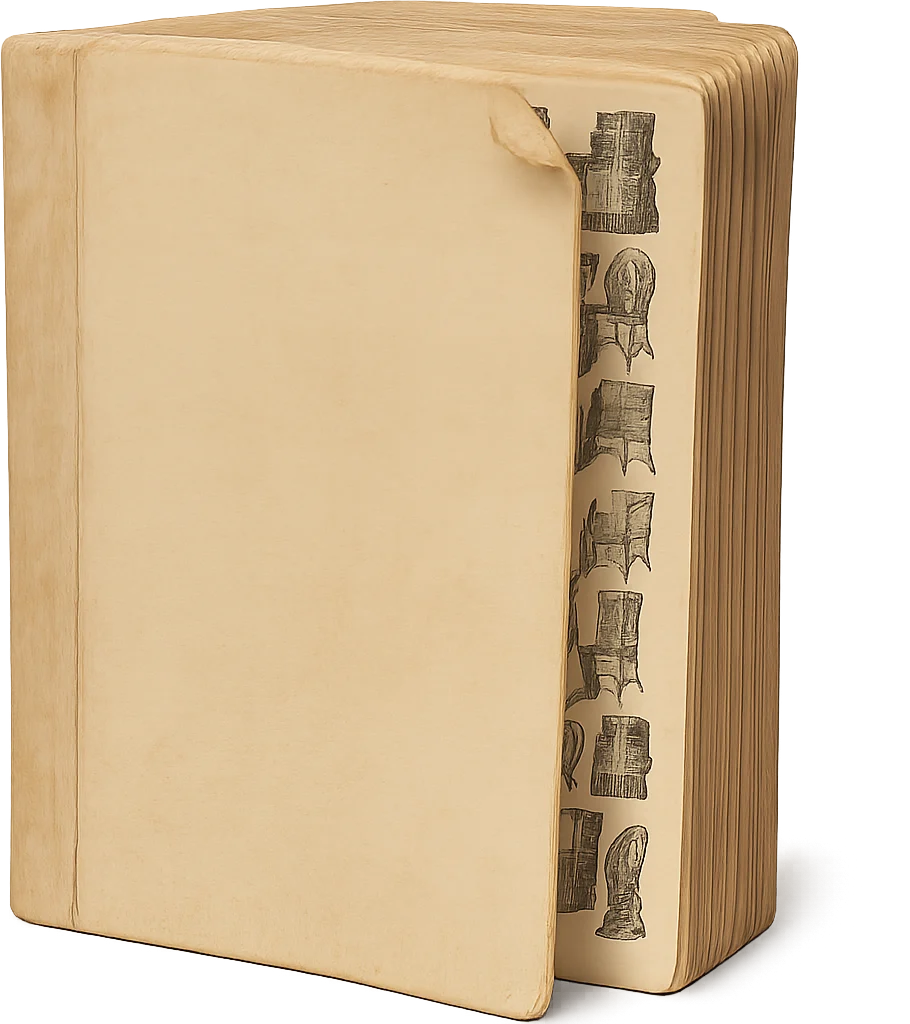 By mail, from 1872
The first machine that read a product
The twentieth century took the shop assistant out of the middle. In 1916 Clarence Saunders opened the first Piggly Wiggly in Memphis and patented the "self-serving store": shoppers walked the aisles and chose for themselves. In 1950 Diners Club let people pay with a card and settle later, and in 1958 Bank of America mailed about sixty thousand unsolicited cards to households in Fresno, the start of what became Visa.
Distance got cheap. On 26 April 1956 Malcom McLean's Ideal X sailed from Newark with 58 containers on deck. The historian Marc Levinson puts the cost of loading loose cargo at the time at $5.83 a ton, against about 16 cents a ton for McLean's boxes. On the night of 17 April 1973 a young company called Federal Express flew 186 packages to 25 American cities and promised them the next morning.
Then, at 8:01 in the morning on 26 June 1974, at Marsh Supermarket in Troy, Ohio, a cashier passed a ten-pack of Juicy Fruit gum over a scanner and it rang up at 67 cents. That beep matters more to this story than anything before it. For the first time a machine read the product. It did not look at the colours on the pack or the words on the front. It read a number, and the number was enough. Products had become something a machine could understand, because the industry agreed on a standard way to write them down.
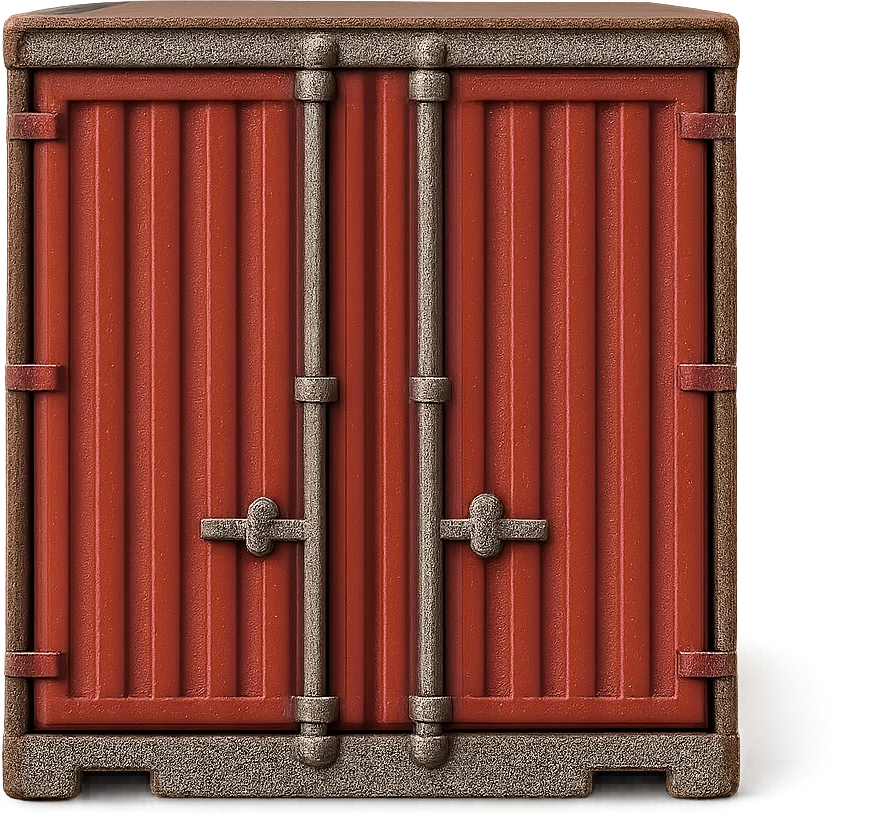 Ideal X, 26 Apr 1956
The page becomes the store
On 11 August 1994 a young man named Dan Kohn sold a copy of Sting's Ten Summoner's Tales on a website called NetMarket for $12.48 plus shipping. The card number was encrypted with PGP. The New York Times ran the story the next day under the headline "Attention Shoppers: Internet Is Open." Four months later Netscape shipped the first secure server for the web, and the little padlock arrived.
In July 1995 a bookshop with an unusual name opened online. Amazon started with books because there were millions of titles and no shop could stock them all, and within a month it had shipped to all fifty states and dozens of countries. eBay, then called AuctionWeb, opened that September; its first sale was a broken laser pointer for $14.83. PayPal, bought by eBay in 2002, gave strangers a way to pay each other without sharing a card. Search engines became the front door, and in 2012 Google turned its shopping search into a feed of paid product listings.
The catalog had come back, as a web page. And the page was built for a human eye: photographs, layout, colour, a button that says Buy. On 2 June 2011 Google, Bing and Yahoo launched schema.org, a shared way to describe products, prices and stock inside the page. For the first time, stores wrote a second version of the page for machines. Most of them did it so search engines would show their price. Few noticed it was the start of something else.
 11 Aug 1994
 It started with books
The size of the till
Thirty years later the numbers are hard to hold in your head. The UN trade body UNCTAD counts more than 28 trillion dollars of online sales across 46 economies in 2024, business and consumer together. In the United States, online sales were 17.1 percent of all retail in the second quarter of 2026. Visa alone counted about 901 million transactions a day in its 2025 financial year. America shipped 23.1 billion parcels in 2025, which works out to 732 every second. Amazon says it delivered more than 13 billion items to Prime members the same day or the next day in 2025.
All of it still runs on the habits of the catalog. A person looks at a page, reads it, trusts it and presses the button. Every layer below this one assumed a human buyer at the end of the line.
A new customer at the door
Now the buyer is changing. People ask an assistant for the best running shoe under a budget, or a gift for a ten-year-old who likes space, and the assistant does the looking. ChatGPT alone had about 900 million weekly users by early 2026. Adobe, which tracks traffic to American retail sites, saw visits referred by AI tools grow by about 1,300 percent over the 2024 holidays and by another 693 percent over the 2025 holidays. In March 2025 those visitors converted 38 percent worse than everyone else. By March 2026 they converted 42 percent better. Adobe is careful to add that the volume is still modest. The intent is not.
The industry moved fast. Anthropic published the Model Context Protocol in November 2024, a common way for AI tools to reach outside systems. Visa and Mastercard announced agent payments in April 2025. Google's Agent Payments Protocol followed that September, with more than sixty organisations behind it. On 29 September 2025 OpenAI and Stripe launched the Agentic Commerce Protocol and Instant Checkout inside ChatGPT. On 11 January 2026, at the big retail show in New York, Google announced the Universal Commerce Protocol, built with Shopify, Etsy, Wayfair, Target and Walmart.
Not all of it stuck. In March 2026 OpenAI stepped back from Instant Checkout, saying it "did not offer the level of flexibility that we aspire to provide", and merchants went back to their own checkouts. Google added a cart that spans retailers. Visa launched a score that tells a merchant whether an AI agent can use its website at all. In August 2026 a US appeals court, ruling on Amazon's case against Perplexity's shopping agent, said "it was the user who 'accessed' Amazon's computers." The details will keep moving. The direction will not: the agent is a buyer, acting for a person.
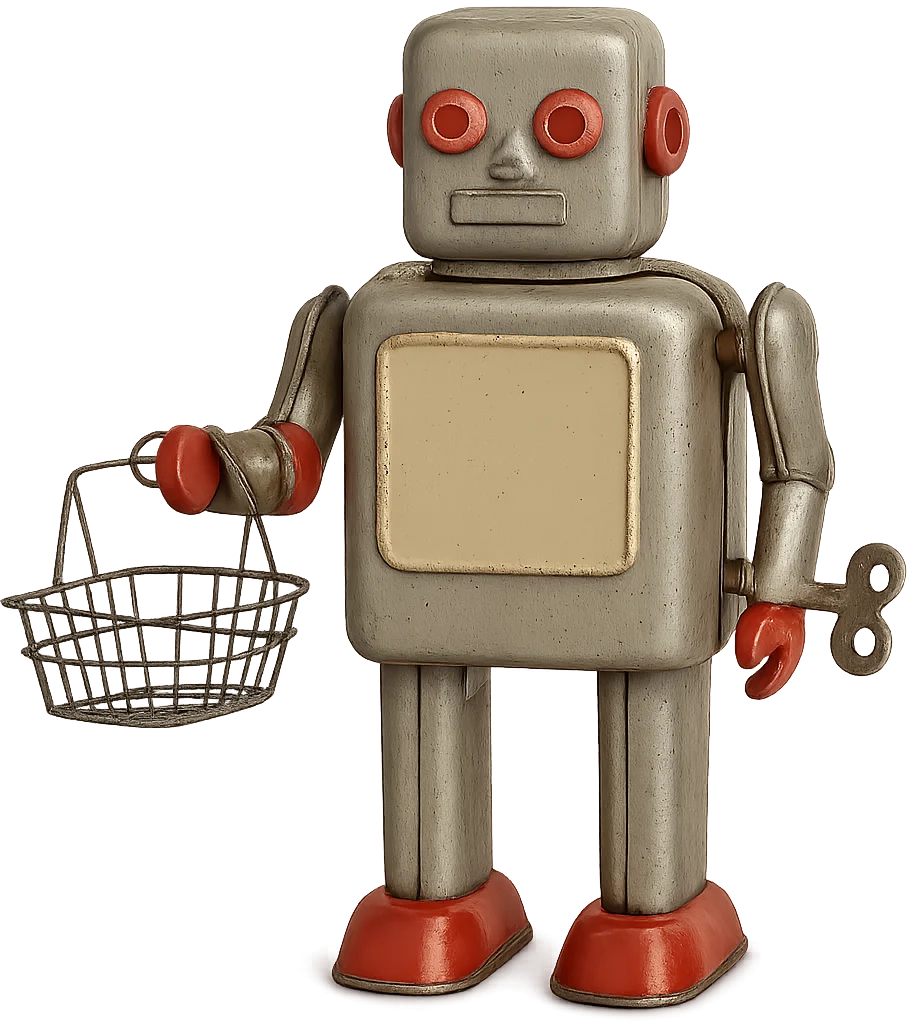 Buyer, 2026
Why the page fails the machine
Here is the problem. Every store on the web was built for the buyer in layer eight: a person with eyes, patience and a thumb. An agent has none of those. It reads text and code. It cannot see that the price is in the picture. It does not know which of three size buttons is out of stock if the page only greys it out. It meets a cookie banner, a pop-up, a cart that empties after a redirect, a puzzle that asks it to click every traffic light.
The research says the same. On WebShop, a benchmark of 1.18 million products, the best model in 2022 completed 29 percent of shopping tasks against 59 percent for skilled people. On WebArena, a GPT-4 agent finished about 14 percent of tasks that people finished 78 percent of the time. On live websites in 2025 the best agent tested completed 61 percent, and on complex shopping requests the best reached 32 percent. Amazon's chief executive put it more bluntly about outside shopping agents: "delivery estimates are frequently wrong. The prices are often wrong."
We see it in our own work. We sort what goes wrong into seven classes, from an element the agent cannot resolve to data that disagrees with the page, and we keep that taxonomy open. In our first live test against real stores, the agent gave up in every one of eight runs: a search box drawn by script, a grid of products read as one product, a price a person could see that existed nowhere a machine could read it. These were small tests, and some failures were ours to fix. But they show the shape of it. An agent does not leave a store because it dislikes the brand. It leaves because it could not finish, and it would rather skip you than guess. Shopify's own default robots file says it in five words: "Checkouts are for humans."
The barcode moment, again
Look back through the box and the answer is already there. Every time trade outgrew the old way of trusting, somebody agreed on a standard and wrote things down in it. The weight became a stamp. The haggle became a printed price. The shop assistant's memory became a barcode. The crate became a container. The page got a hidden copy in schema.org. Each standard let strangers trade at a larger scale than before.
Agents need the same thing, and it is arriving as protocols. UCP, ACP, AP2 and MCP each write down, in a form a machine can rely on, the questions a buyer can ask a store, the answers it should get, the actions it can take and the errors it might meet. A protocol does not replace the page. The page is still for people, and the two have to agree. But the agent is the first buyer in history that reads only the standard. If a fact is not written down where it can read it, then for that buyer the fact does not exist.
The good news is that much of the groundwork is laid. Of 307 stores we captured, 259 already carry schema.org product data. The gap is the next step: most stores we track declare no agent protocol at all. When one does, it usually arrives through the platform rather than the merchant. We found Shopify's agent adapter on 11 of 12 Shopify stores we scanned, and on none of the stores built on other platforms or built by hand.
What goes in the box now
None of this needs a new store. It needs the store you have to be readable by a second kind of customer. If you sell online, four things matter most.
- Write the facts down. Price, stock, variants, delivery dates and returns, as plain text and as structured data that matches the page. If the page and the data disagree, the agent trusts neither.
- Speak a protocol. If your platform offers UCP or an agent adapter, check that it is switched on and that it returns the same answers as your page. If you built your own store, plan for it.
- Let the right machines in. A machine customer is not a scraper. It brings a buyer with it. Blocking every bot blocks those buyers too.
- Measure it. Send an agent through your store and watch where it stops. Fix that, then measure again.
That last one is why Machine Commerce exists. We are an applied AI research lab, and we study how machines buy: how agents read product pages, compare offers and complete checkouts, and what merchants must change to be chosen. We publish the method, keep the taxonomy open and score readiness the same way every time. Measured, not marketed.
The box has always carried the same promise: someone you will never meet wants what you have. For five thousand years that someone was a person. The next hand to open the box may not be a hand at all. It will read the label, and only the label. Make sure yours says what it needs to.
Sources
- W. S. Jevons, Money and the Mechanism of Exchange (1875); C. Humphrey, "Barter and Economic Disintegration" (1985), quoted via History News Network.
- D. Schmandt-Besserat, From accounting to writing.
- Early electrum coinage: Sardis Expedition; Magna Carta clause 35: University of East Anglia.
- Champagne fairs: Edwards and Ogilvie; Pacioli: ICAEW; jiaozi: World History Encyclopedia.
- Trade mark No. 1: UK IPO; Wanamaker: Pennsylvania historical marker; price tags: NPR.
- Montgomery Ward: Chicago History Museum; Rural Free Delivery: USPS; Parcel Post: Smithsonian Postal Museum.
- Self-serving store: US patent 1,242,872; BankAmericard: Visa; Ideal X: The Geography of Transport Systems and M. Levinson, The Box; FedEx: FedEx; first barcode scan: History.com.
- NetMarket: The New York Times, 12 August 1994, via Wikipedia; Netscape Commerce Server: announcement; Amazon: History of Information; eBay and PayPal: SEC filing; schema.org: Google.
- Scale: UNCTAD, US Census Bureau, Visa 10-K, Pitney Bowes, Amazon.
- Agents and traffic: Search Engine Land; Adobe holiday 2024, holiday 2025, Q1 2026 via TechCrunch.
- Protocols: MCP, Visa Intelligent Commerce, Mastercard Agent Pay, AP2, ACP and Instant Checkout, UCP, Universal Cart, Visa Agent Score; Instant Checkout change: TechCrunch; Amazon v. Perplexity: Cooley.
- Benchmarks: WebShop, WebArena, Online-Mind2Web, DeepShop; A. Jassy, Q3 2025 earnings call.
- Machine Commerce: failure taxonomy, machine customers are not bots, from product pages to product protocols. Store counts come from our own captures and scans in October 2026; they describe the stores we looked at, not the whole web.
The machine customer.
Commerce has a new reader. What changes when that reader can buy?
Read the manifesto